Tag Archives: curriculum

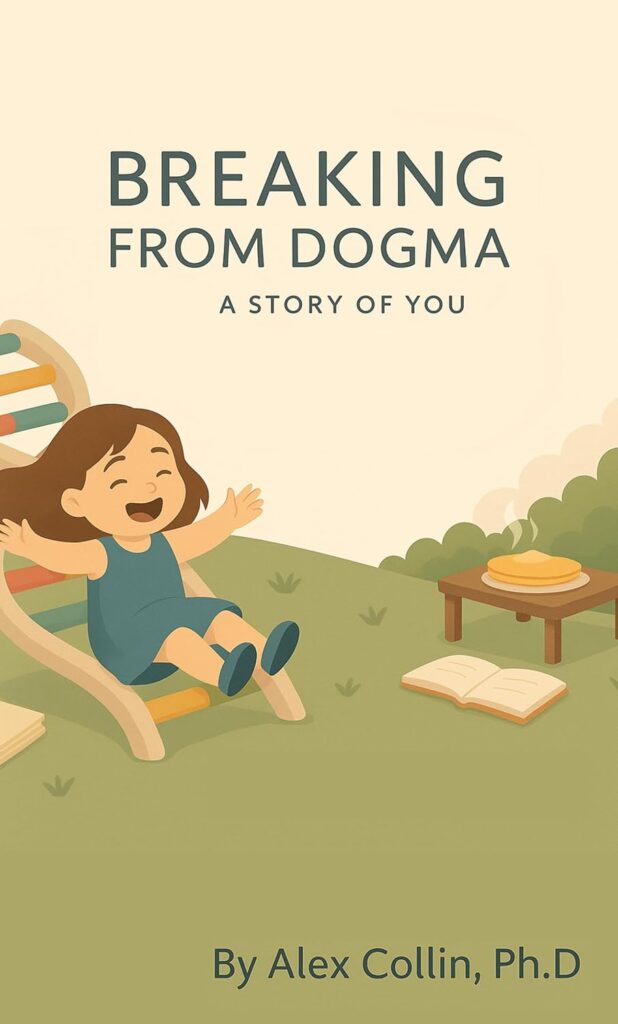
Breaking from Dogma: A Story of You by Alexandra Collin de l’Hortet (Book Review)

A science-inspired children’s book about DNA, epigenetics, and the amazing power of being you!

Ever wondered how your body knows what to do, or why you’re different from everyone else, even though we all start with the same recipe book inside?
Breaking from Dogma takes young readers on a beautifully illustrated journey inside the human cell to explore the big ideas of DNA, genes, and epigenetics, all explained in a warm, playful, and empowering way.
From cooking book metaphors to magical sticky notes, this story helps kids (and grown-ups too!) understand that who we are is shaped not just by our genes, but also by our environment, experiences, and choices.

  • Perfect for curious kids ages 4–8
  • Introduces biology, genetics, and epigenetics
  • Encourages growth mindset and self-discovery
  • Great for classrooms, family who love science, STEM, or storytime

Because nature and nurture don’t compete, they dance together to help you shine!


Amazon Purchase Link


I received a complimentary copy of this book from Reedsy Discovery.  I voluntarily chose to read and post an honest review.


Breaking from Dogma takes readers on an enlightening journey inside the human cell to explore DNA, genes, and epigenetic, all brought to life through engaging and captivating illustrations.

Have you ever wondered how your body knows what to do or why you’re different from everyone else? You can thank your cells for that! Breaking from Dogma informs readers that their body is comprised of trillions of cells, which make up everything, including your skin! Thanks to the artist, the audience will get a magnified look at muscle, fat, and skin cells. And, as the character looks through a microscope, we get an even closer look at a cell. In the enhanced photo, we learn what is and where you’ll find a cell’s nucleus and cytoplasm. Don’t worry if kids can’t recall their meaning; there is a glossary in the end credits for every scientific word in the story, plus several more that weren’t.

Every child’s capacity to learn, understand, and retain information varies. The book’s suggested reading age is 4-8. It’s evident the author put a lot of thought into explaining genes and the Central Dogma of Molecular Biology: DNA, RNA, and proteins for this age range. The inclusion of silly, fun, and age-appropriate artwork, such as three smiling organs reading recipe books, was a nice touch. It was just what was needed to keep readers engaged.

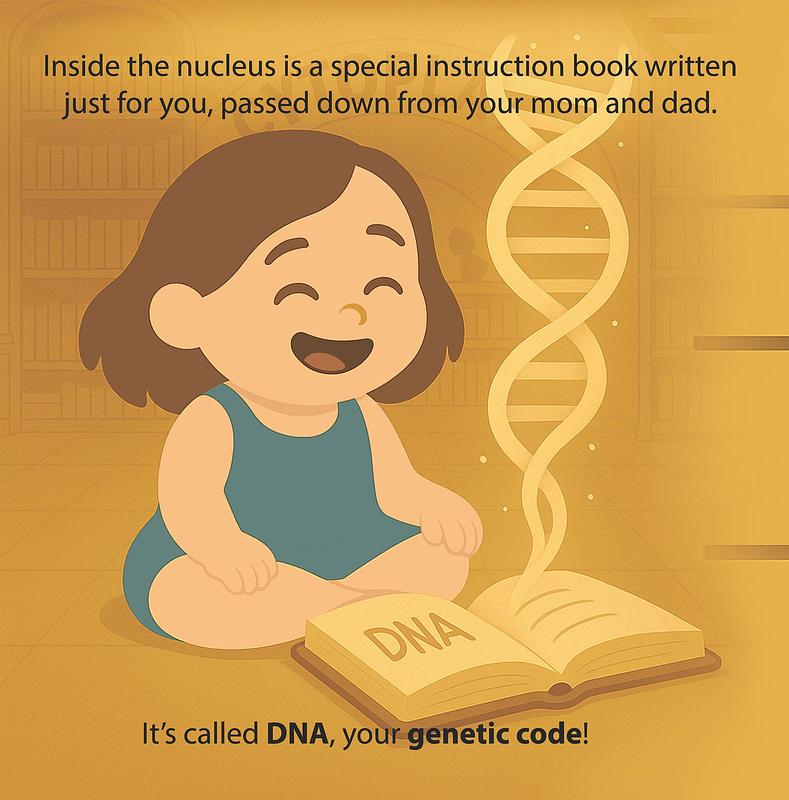
The term “epigenetic inheritance” might sound complex, but Breaking from Dogma simplifies it beautifully. “It’s a kind of memory from our ancestors experiences. A whisper from the past, living in your cells.” While the term might be challenging for young minds to retain, they should be able to remember its meaning. Especially if shown the lovely image of the little girl holding onto an illuminated DNA as she stares in awe at her three ancestors above her head. So sweet.

Breaking from Dogma is a beautifully designed book that does a good job of breaking down how DNA and life experiences work hand in hand to shape who we are. While the illustrations are catered to 4-8-year-olds, kids in this age bracket might struggle to recall or pronounce some science terms. Therefore, I recommend reading the book more than once!

Breaking from Dogma is a must-have for elementary school classrooms, homeschoolers, and families who love science. Add the book to your curriculum. Read it for fun. Increase your science knowledge or use it to refresh your brain. (Yeah, adults, I am talkin’ to you!). Learn together that our genes do not just shape us, but so do our environment, experiences, and choices.


Heart Rating System:
1 (lowest) and 5 (highest) 
Score: ❤❤

Amazon Purchase Link


Meet the Author

Alex Collin (Alexandra Collin de l’Hortet) is a biotech executive with over a decade of experience leading the development of innovative therapies in gene therapy. Raised in France and now based in the San Francisco Bay Area, she brings a unique blend of international perspective, scientific expertise, and creative curiosity to everything she writes.

As a parent of two curious young children, Alex has experienced firsthand the power of storytelling to make sense of the world. She is passionate about transforming complex scientific ideas into playful, empowering stories that children can connect with and understand.

Drawing on both a deep love of storytelling and a career at the forefront of science, Alex writes to spark wonder, build confidence, and inspire the next generation of curious thinkers.

Amazon Author Page Link
Reedsy Author Link


Leave a Comment

Filed under Uncategorized

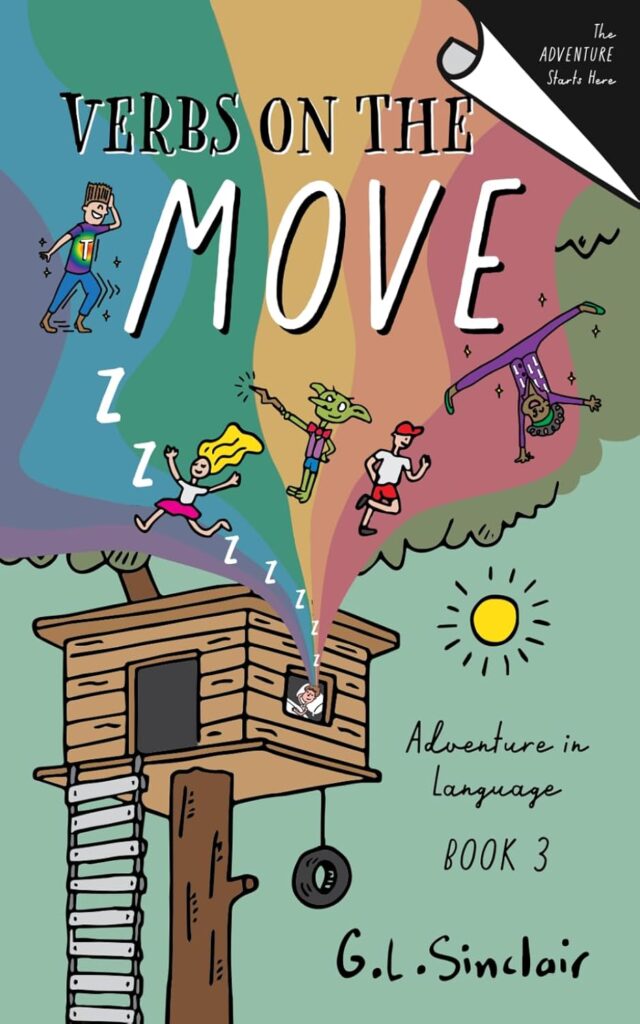
Verbs on the Move: Adventures in Language Series, Book Three by G. L. Sinclair (Book Review)


Join the Verbs on the Move

Dive into an exciting adventure where storytelling meets language education! In “Verbs on the Move,” readers embark on a journey through vibrant tales that bring the world of verbs to life. This book seamlessly blends captivating stories with educational insights, making learning both fun and engaging.
Explore:

  • Action Verbs
  • Linking Verbs.
  • Helping (Auxiliary) Verbs:
  • Regular/Irregular Verbs
  • And more!

Join in this linguistic adventure and watch as verbs come alive, guiding you through life’s movements and challenges with kindness, playfulness, and purpose.

Amazon Purchase Link


I received a complimentary copy of this book from Reedsy Discovery. I voluntarily chose to read and post an honest review.


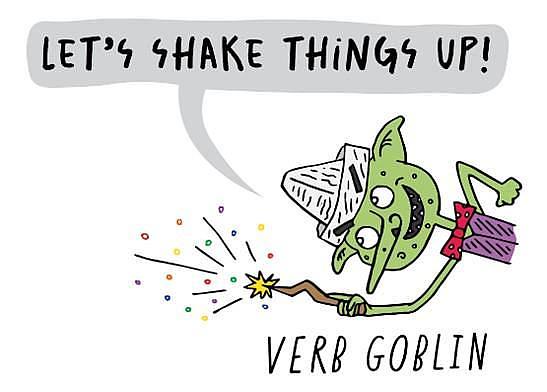
G.L. Sinclair is the brilliant creator behind the Adventures in Language series. Punctuation Retreat, book one in the seriespresents information in a whimsical and fun way that entertains kids instead of their typical reaction to grammar lessons — yawns. Their last grammar book, Magical Noun Quest, helped elementary students discover the magic of nouns and how the world would crumble without them. This time, kids will dive into another exciting literary adventure, bringing the world of verbs to life. Action verbs. Linking verbs. Helping verbs. Transitive or intransitive verbs. The creator will educate and entertain their audience through a creative storyline and (sometimes) silly images. I snickered at the pink and purple elephant rocking a tutu as they danced through time with their comrades. The Verb Goblin looked adorable in his dictionary page-turned hat. It sparked a childhood memory of how we folded the weekend newspaper into hats that doubled as boats. There was so much to love about Verbs on the Move. Follow me as I summarize its eight chapters.


Alex was a curious ten-year-old who aspired to become a writer. He knew achieving his goals meant studying grammar. Today, Alex focused on verbs, the tiny but powerful words that made sentences come alive. As Alex relaxed in the treehouse with a book on verbs, his eyes grew heavy, and soon he was drifting off to sleep. No sooner had Alex closed his eyes in his fortress of solitude (aka the treehouse) than he was transported to Verb Village, where guests were about to discover which verb is the fastest. The racers had cutesy action word names, such as Running Rita and Dashing Dan. Even the race’s organizer had an action-infused name: Action Andy. The race was action-packed; unfortunately, readers won’t see any of it. However, there was a picture of the winning trophy, which had a unique feature. (No spoilers)

Alex’s time at Verb Village carried over into his next night’s sleep. Tonight’s mission is to assist Helping Harry in figuring out how to help the main verbs with the correct tense; a tedious mission unless you join Main Verb Mary’s learning game at the playground. Townspeople were leaping over exclamation point hedges, among other imaginative obstacles. Learning about present, past, and future verb tenses has never been this much fun! 


In chapter three, the Verb Goblin is being his mischievous self, turning verbs into nouns. We watch inanimate objects come to life, such as the table that sprouted arms and legs. I hoped more images were included featuring moments from the bizarre talent show, such as tables stacking dishes into towers or a joke courtesy of the winged stick of butter. But that said, kids will understand how to turn a noun into a verb through the writer’s creative storytelling. For example, by adding -ing to ‘book,’ the noun has been transformed into a verb (booking). 


As Alex’s adventure in Verb Village continues, we meet Stative Steve. Stative might be an unfamiliar literary term for most kids. It’s a verb that describes states of being. For example, if someone tells you they are feeling blue today, you understand they are sad. The author also explores transitive (verbs that need an object) and intransitive (verbs that don’t need an object), two more (possibly) confusing verb words. Transitive Tina and Intransitive Ian attempt to simplify a mind-twisting subject matter. Do they succeed in their quest? Yes, they do through (what I consider) a verb improv show. The performance might inspire classrooms to create an improv show. Wouldn’t that be fun! 


Alex’s journey into the land of verbs continues at The Greatest Verb Bake-Off. Like with the race, every contestant’s name begins with a verb. While the names were catchy, their unique skills captivated me the most. Mixing Mike’s arms spun like mixer beaters while Stirring Sarah dazzled audiences with pirouettes as she stirred not one…not two…but three bowls at once. Oh, how I would love for this scene… better yet, the entire book brought to life! It would be a perfect educational animated program for kids who enjoy cartoons like Wild Kratts or Magic School Bus. This chapter had to be my favorite. The chefs worked as a team to fix the Verb Goblin’s kitchen tricks. Read the story to find out what trick he played and how it affected the kitchen. Be ready to have your sweet tooth activated! 


I was amazed at the writer’s ability to develop scenes with witty dialogue that simplified the parts of speech. Whether we join Alex at the Verb Olympics, the racetrack, kitchen, playground, town square, festival, or other exciting areas in Verb Village, kids will realize verbs’ essential role in bringing sentences and stories to life! 


Verbs on the Move: Adventures in Language entertains and educates the audience through witty dialogue and action-packed scenes. It’s a must-have for your public or homeschool curriculum! 


Heart Rating System:
1 (lowest) and 5 (highest) 
Score:  

Amazon Purchase Link


Meet the Author

I am an accountant by profession and have retired after many years of service. I always wanted to write a book. I developed a series of 6 books on punctuation/grammar for kids. This is a completely new experience for me, and I hope you like what I have written.

Amazon Author Page Link
Reedsy Author Link


Leave a Comment

Filed under Uncategorized

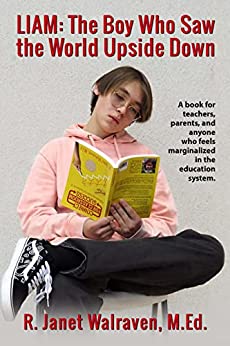
LIAM: The Boy Who Saw the World Upside Down by R. Janet Walraven (Book Review)

What does a teacher do with a teenage student who can’t seem to read, write, speak, or want to mix in with others? What does a parent do when their child is continually bullied throughout elementary school without teachers or administrators seeming to care? Where is a safe place for students with challenges that no one seems to understand?

This is a true story. When Liam came to my classroom, I knew something was off. What was I supposed to do with this student who was extremely withdrawn? I didn’t know, but I knew I had to find out ̶ a challenge that I could not ignore. This book isn’t only about bullying, though there was plenty of that. It’s about a boy who needed help to allow his potential to surface. If you are a teacher, a parent, or anyone who has witnessed, or have themselves experienced this, you need this book. LIAM will give you hope.

Amazon Purchase Link


I received a complimentary copy of this book from Reedsy Discovery. I voluntarily chose to read and post an honest review.


There was a time when anyone who didn’t catch on at the same pace as others were labeled “retarded.” R. Janet Walraven notes thanks to former President Obama passing Rosa’s Law, “mental retardation” and “mentally retarded” were replaced with “intellectual disability” and “individual with an intellectual disability.” Unfortunately, this change in federal law did not replace the use of these terms in state law. The author also states in chapter eight, “In 1975, President Gerald Ford signed a law guaranteeing that every child with a disability would get Free and Appropriate Public Education (FAPE). This is supposed to be included in the Individualized Education Programs, IEP’s, that special education teachers write. From there, they have options of working with the child onsite, sending them away for therapy, …or waiting for litigation.” R. Janet Walraven states that many teachers look the other way at a child’s apparent struggles because they lack support in costs and help from the administration. LIAM: The Boy Who Saw the World Upside Down is a prime example of when the administrator fails a teacher, fails to support the students and makes doing a teacher’s job harder than necessary. 

Thirteen-year-old Liam has made a move from public to private school. His parents made a choice, not out of a need for better education. No, they are transferring him because they feel he’s unsafe in public school. Ms. J, the 8th-grade teacher at the private school, has a full class, but the principal, Mr. Chadwick, doesn’t care. That’s a recurring theme with him. He doesn’t care about the students’ safety, best interests, or helping the faculty. He abuses his power on several occasions. 

Ms. J. could’ve been like Liam’s other teachers and accepted Liam as “mentally retarded” and let him float by. Liam’s parents, even Liam, accepted the label. Since Ms. J didn’t have proper special education training, the parents and Liam wouldn’t have faulted her. However, Ms. J was different from the other teachers. She thought Liam was mislabeled. She saw his intelligence, his potential. Ms. J stood up to the principal. She put her foot down when the bullies chants shredded Liam’s confidence. She sought outside help for Liam and even drove him to his sessions at Hope Clinic. 

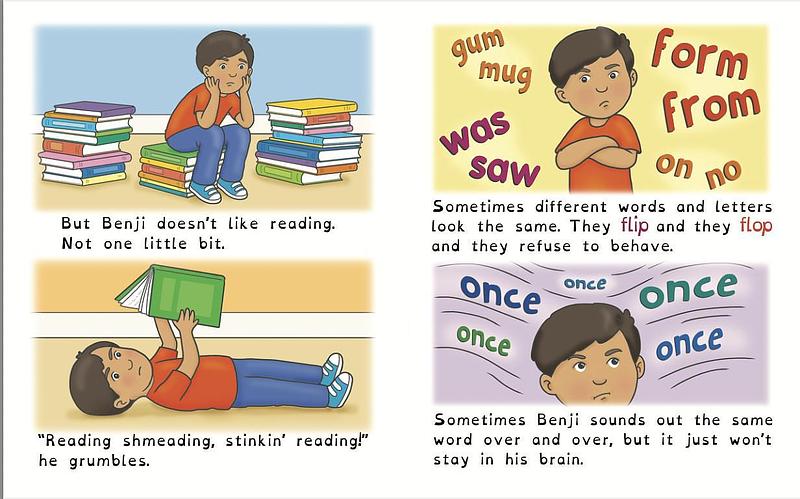
Hope Clinic properly diagnosed Liam, and he was not “retarded.” Liam has visual perception dysfunction. The book explains it in length, but (basically) Liam’s brain wasn’t computing what his eyes saw. He needed special glasses and exercises to retrain the brain. Thanks to Ms. J and her cousins, Liam never missed an appointment. Liam could afford specialized care thanks to his parents selling their home and moving into a trailer. I was angry to see the colossal sacrifice his parents had to make but also touched by their display of love. 

LIAM: The Boy Who Saw the World Upside Down was FULL of emotions. I wanted to cry when the boys tore him down with their chants. I wanted to cry again at his graduation. My heart nearly burst when Willow asked Liam to join her in Jump Rope for Heart and the school newspaper. I cheered Liam when he repeatedly showed the world they were wrong about him. 

I’ve worked in mainstream and special education classrooms. I’ve seen how people treat students that need extra help. Basically, I’ve run into my share of Mr. Chadwick’s. However, I also had the great pleasure of working with teachers who resemble Ms. J. They go the extra mile and then a thousand more. 

Ms. J didn’t know to teach Liam (at first), but she didn’t give up on him. Students like Liam are highly intelligent. They only need to discover a way to show it. It could be reading glasses. It could be having questions read to them. I know teachers are overwhelmed, overworked, and underpaid, but this story is a prime example of what can happen when teachers, administrators, and parents work together. 

I encourage educators and parents of children with intellectual disabilities to read this book. It’s inspirational. It’s heart-warming. It’s worthy of five stars! 

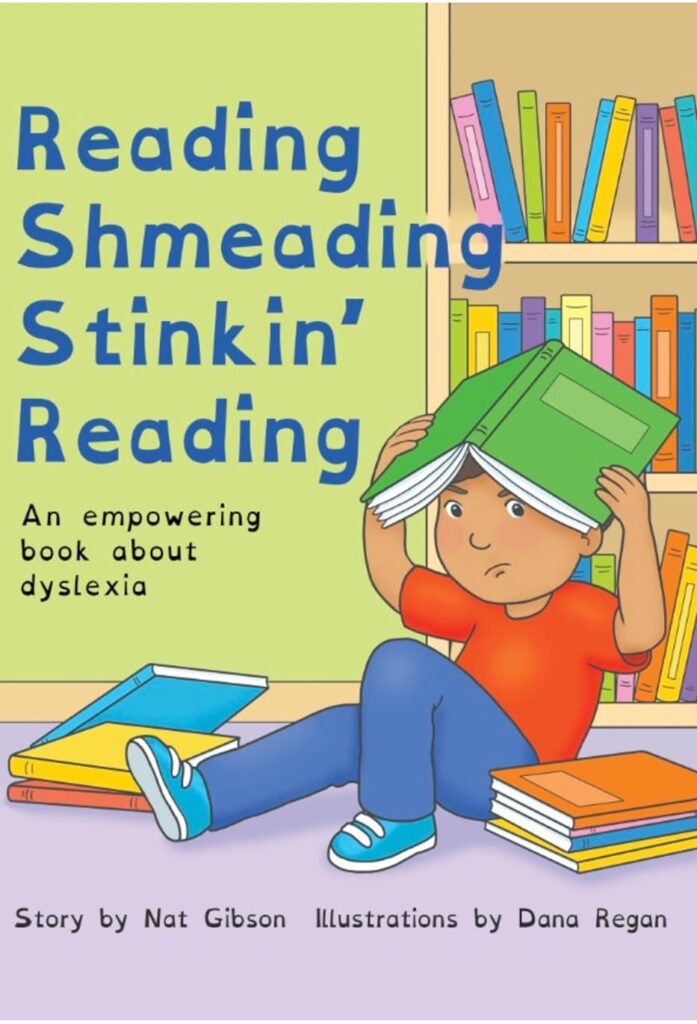
Be sure and look at the bonus material at the back of the book. Meet “Liam” and his best friend “Willow.” See where they are now. View writing samples from Liam. Also, check out appendix C: Characteristics of Dyslexia.


Heart Rating System:
1 (lowest) and 5 (highest) 
Score: ❤❤❤

Amazon Purchase Link


Meet the Author


R. Janet Walraven, Silver Award Winner (Readers’ Favorite International Book Awards) has written historical romance, a teacher-mentor book, children’s book, & historical fiction. She lives in New Mexico with her companion, Mal, her best critic & support. She loves to read, write, garden and travel.

Reedsy Author Link


1 Comment

Filed under Uncategorized