
Tag Archives: dyslexia

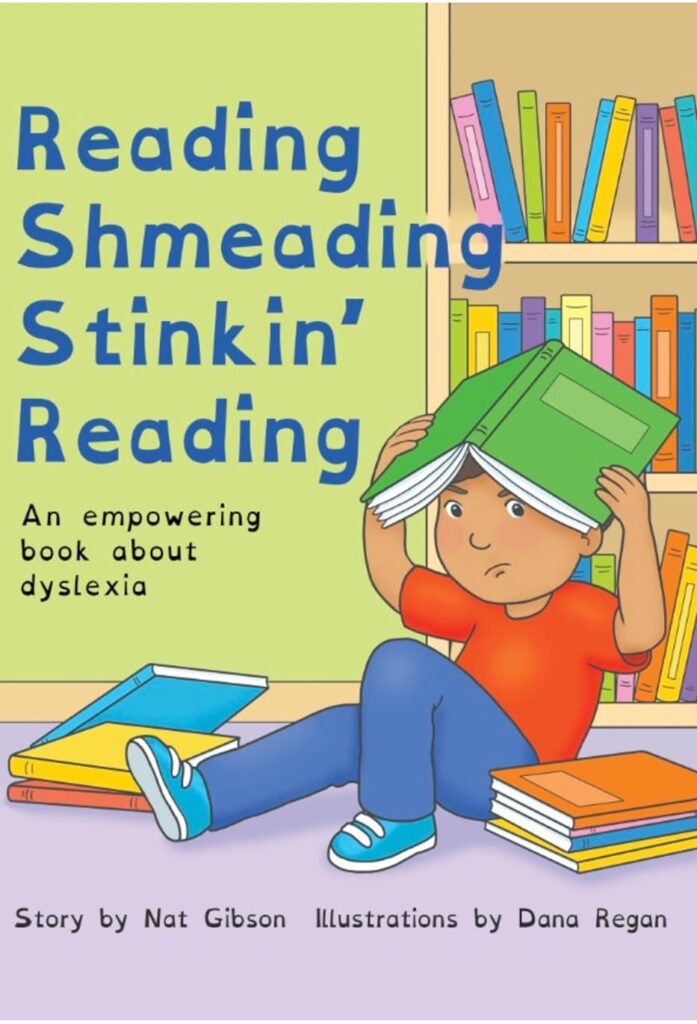
Reading Shmeading Stinkin’ Reading: An empowering book for children with dyslexia by Nat Gibson (Book Review)

Out today!!!

For children with dyslexia, learning can feel frustrating – and confidence can fade fast.

Benji knows this feeling well.

But during a class project, a moment with his teacher helps him notice something new: his mind works differently than the other children’s – and that difference helps him come up with a unique solution no one else sees.

More than a story, this book is a gentle tool for parents and educators to start a meaningful conversation about dyslexia – helping children shift their perspective to see it as a powerful part of who they are, one that can bring extraordinary strengths and opportunities for success.

Printed in a dyslexia-friendly font. Great for classrooms, bedtime, and days when dyslexia feels extra tough.

Amazon Purchase Link


I received a complimentary copy of this book from Reedsy Discovery. I voluntarily chose to read and post an honest review.


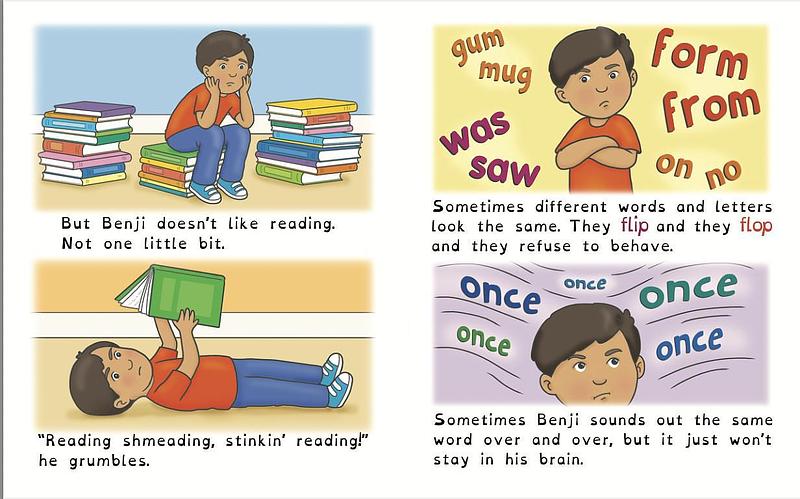
The Mayo Clinic defines dyslexia as “a learning disorder that involves difficulty reading due to problems identifying speech sounds and learning how they relate to letters and words (decoding).” Contrary to stigmas, individuals with dyslexia do not read backwards, and the condition doesn’t diminish their intelligence. A dyslexic person’s brain can confuse the correct order of letters in a word (writing) and become confused by two similar words (reading, e.g., “from” and “form”). This can be frustrating for the individual and affect their school or work life.

In Reading Shmeading Stinkin’ Reading: An empowering book about dyslexia, we step into Benji’s world. We witness how frustrating reading and writing are for him because the letters flip and flop, and sometimes he struggles to start a word. Though Benji struggles with reading and writing, his brain excels creatively. Where other kids need step-by-step instructions to complete a project, Benji’s supercharged brain examines the supplies and creates a mental path to the final product. (Fantastic illustrations showing his struggles and strengths.)

Benji’s teacher understood his condition and tailored this activity to fit his skills. It boosted his self-confidence, allowed him to show his leadership skills, and demonstrated how we all learn in different ways. There will undoubtedly be many children listening to this story who will relate to Benji. They will share his frustrations and (hopefully) speak up if reading, writing, or processing language is difficult for them. This story will also show kids that having dyslexia does not mean a person is not smart. It means educators and parents must find ways to help a child express or make sense of what they see.

I recommend reading Reading Shmeading Stinkin’ Reading: An empowering book about dyslexia with any child facing day-to-day challenges. Share Benji’s story with your students and let’s squash the misconception that a person with dyslexia has a lower intelligence, because they don’t! Also, see which five famous people with dyslexia the author featured in the book who have left a positive mark on history!

The recommended reading age is 5-9 years.

Heart Rating System:
1 (lowest) and 5 (highest) 
Score: ❤️❤️❤️❤️❤️

Amazon Purchase Link


Meet the Author

Nat Gibson lives in California with her husband and two children, both of whom had surgery before turning 4 years old. Her books are designed to help parents engage their child’s imagination as they go through new or difficult experiences.


Leave a Comment

Filed under Uncategorized

LIAM: The Boy Who Saw the World Upside Down by R. Janet Walraven (Book Review)

What does a teacher do with a teenage student who can’t seem to read, write, speak, or want to mix in with others? What does a parent do when their child is continually bullied throughout elementary school without teachers or administrators seeming to care? Where is a safe place for students with challenges that no one seems to understand?

This is a true story. When Liam came to my classroom, I knew something was off. What was I supposed to do with this student who was extremely withdrawn? I didn’t know, but I knew I had to find out ̶ a challenge that I could not ignore. This book isn’t only about bullying, though there was plenty of that. It’s about a boy who needed help to allow his potential to surface. If you are a teacher, a parent, or anyone who has witnessed, or have themselves experienced this, you need this book. LIAM will give you hope.

Amazon Purchase Link


I received a complimentary copy of this book from Reedsy Discovery. I voluntarily chose to read and post an honest review.


There was a time when anyone who didn’t catch on at the same pace as others were labeled “retarded.” R. Janet Walraven notes thanks to former President Obama passing Rosa’s Law, “mental retardation” and “mentally retarded” were replaced with “intellectual disability” and “individual with an intellectual disability.” Unfortunately, this change in federal law did not replace the use of these terms in state law. The author also states in chapter eight, “In 1975, President Gerald Ford signed a law guaranteeing that every child with a disability would get Free and Appropriate Public Education (FAPE). This is supposed to be included in the Individualized Education Programs, IEP’s, that special education teachers write. From there, they have options of working with the child onsite, sending them away for therapy, …or waiting for litigation.” R. Janet Walraven states that many teachers look the other way at a child’s apparent struggles because they lack support in costs and help from the administration. LIAM: The Boy Who Saw the World Upside Down is a prime example of when the administrator fails a teacher, fails to support the students and makes doing a teacher’s job harder than necessary. 

Thirteen-year-old Liam has made a move from public to private school. His parents made a choice, not out of a need for better education. No, they are transferring him because they feel he’s unsafe in public school. Ms. J, the 8th-grade teacher at the private school, has a full class, but the principal, Mr. Chadwick, doesn’t care. That’s a recurring theme with him. He doesn’t care about the students’ safety, best interests, or helping the faculty. He abuses his power on several occasions. 

Ms. J. could’ve been like Liam’s other teachers and accepted Liam as “mentally retarded” and let him float by. Liam’s parents, even Liam, accepted the label. Since Ms. J didn’t have proper special education training, the parents and Liam wouldn’t have faulted her. However, Ms. J was different from the other teachers. She thought Liam was mislabeled. She saw his intelligence, his potential. Ms. J stood up to the principal. She put her foot down when the bullies chants shredded Liam’s confidence. She sought outside help for Liam and even drove him to his sessions at Hope Clinic. 

Hope Clinic properly diagnosed Liam, and he was not “retarded.” Liam has visual perception dysfunction. The book explains it in length, but (basically) Liam’s brain wasn’t computing what his eyes saw. He needed special glasses and exercises to retrain the brain. Thanks to Ms. J and her cousins, Liam never missed an appointment. Liam could afford specialized care thanks to his parents selling their home and moving into a trailer. I was angry to see the colossal sacrifice his parents had to make but also touched by their display of love. 

LIAM: The Boy Who Saw the World Upside Down was FULL of emotions. I wanted to cry when the boys tore him down with their chants. I wanted to cry again at his graduation. My heart nearly burst when Willow asked Liam to join her in Jump Rope for Heart and the school newspaper. I cheered Liam when he repeatedly showed the world they were wrong about him. 

I’ve worked in mainstream and special education classrooms. I’ve seen how people treat students that need extra help. Basically, I’ve run into my share of Mr. Chadwick’s. However, I also had the great pleasure of working with teachers who resemble Ms. J. They go the extra mile and then a thousand more. 

Ms. J didn’t know to teach Liam (at first), but she didn’t give up on him. Students like Liam are highly intelligent. They only need to discover a way to show it. It could be reading glasses. It could be having questions read to them. I know teachers are overwhelmed, overworked, and underpaid, but this story is a prime example of what can happen when teachers, administrators, and parents work together. 

I encourage educators and parents of children with intellectual disabilities to read this book. It’s inspirational. It’s heart-warming. It’s worthy of five stars! 

Be sure and look at the bonus material at the back of the book. Meet “Liam” and his best friend “Willow.” See where they are now. View writing samples from Liam. Also, check out appendix C: Characteristics of Dyslexia.


Heart Rating System:
1 (lowest) and 5 (highest) 
Score: ❤❤❤

Amazon Purchase Link


Meet the Author


R. Janet Walraven, Silver Award Winner (Readers’ Favorite International Book Awards) has written historical romance, a teacher-mentor book, children’s book, & historical fiction. She lives in New Mexico with her companion, Mal, her best critic & support. She loves to read, write, garden and travel.

Reedsy Author Link


1 Comment

Filed under Uncategorized